 Ava Everhart
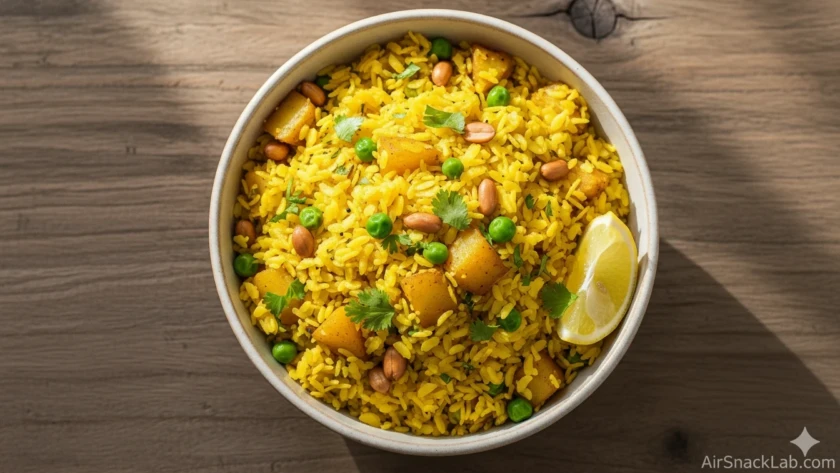
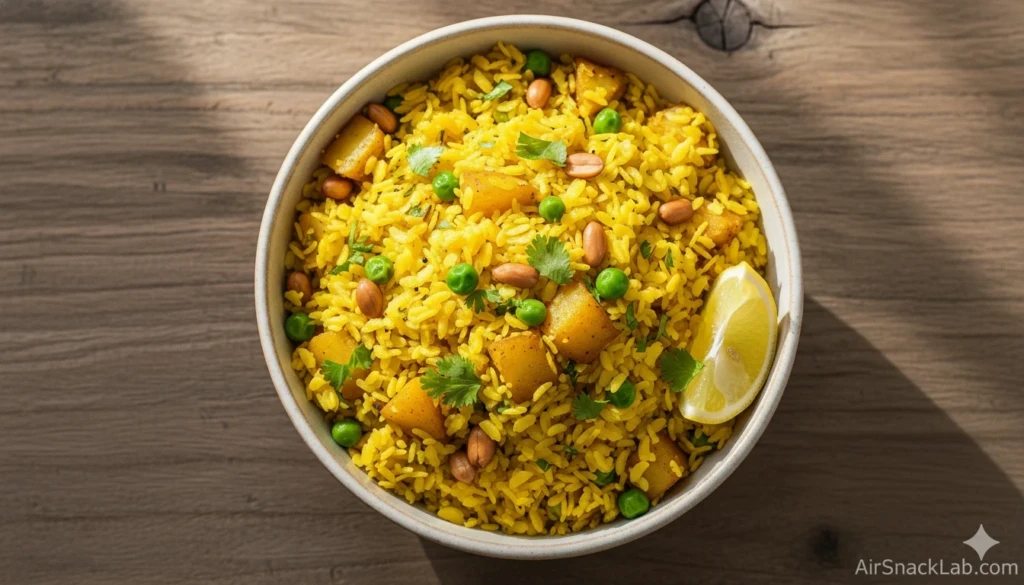
 If you grew up in India, there’s a good chance poha was one of your most comforting breakfasts—soft flattened rice cooked with onions, potatoes, peanuts and a simple tadka. If you’re new to Indian food, this poha recipe is one of the easiest and most rewarding dishes you can start with.
In this detailed poha recipe guide, I’ll show you:
- Exactly what poha rice is and how to choose the right kind
- How to make poha step by step so it’s fluffy, not mushy
- Variations to make it simpler, healthier or more loaded
- Poha calories and nutritional value per serving
- FAQs like “Is poha healthy?” and “poha kaise banta hai?” in simple language
This is a classic Maharashtrian-style kanda batata poha (kanda = onion, batata = potato) that works beautifully as breakfast, snack or even a light dinner.
If you love traditional Indian breakfasts, don’t miss our full collection of
Indian breakfast recipes on AirSnackLab.
What Is Poha Rice?
Poha is made from flattened rice, also called beaten rice or poha rice. Raw rice is parboiled, rolled and flattened into light, dry flakes that can be thick or thin. When these flakes are rinsed and lightly steamed in a pan, they turn soft and fluffy.
Types of poha rice you’ll find:
- Thin poha – very light, used for chivda and snacks
- Medium or thick poha – best for this poha recipe, as it holds its shape
For a good poha recipe, choose medium or thick poha so it doesn’t break and turn mushy during cooking.
Why You’ll Love This Poha Recipe
- ✅ Quick – 25 minutes from start to finish
- ✅ Simple ingredients – most things are from your basic pantry
- ✅ Customizable – skip potatoes, add more veggies, make it spicier or milder
- ✅ Light but filling – a great way to start the day or enjoy a 4 pm snack
- ✅ Vegetarian and easily made vegan
This poha recipe is very close to what many Maharashtrian homes make, with a few practical tips added so it works even if you’re cooking poha for the first time.
Ingredients for Poha Recipe
Main Ingredients
- 2 cups thick poha (flattened rice)
- 1 medium onion, finely chopped
- 1 medium potato, peeled and cut into small cubes
- 2–3 tablespoons peanuts
- 1–2 green chilies, finely chopped (adjust to taste)
- 8–10 curry leaves
- 1 tablespoon oil (plus 1 teaspoon extra if needed)
- ½ teaspoon mustard seeds
- ½ teaspoon cumin seeds
- ¼ teaspoon turmeric powder
- Salt to taste
For Garnish & Serving
- ½ lemon, cut into wedges
- 2–3 tablespoons fresh coriander leaves, chopped
- 2–3 tablespoons fresh grated coconut (optional, for authentic Maharashtrian feel)
- Sev or bhujia (optional, for crunch on top)
How to Prep Poha Properly
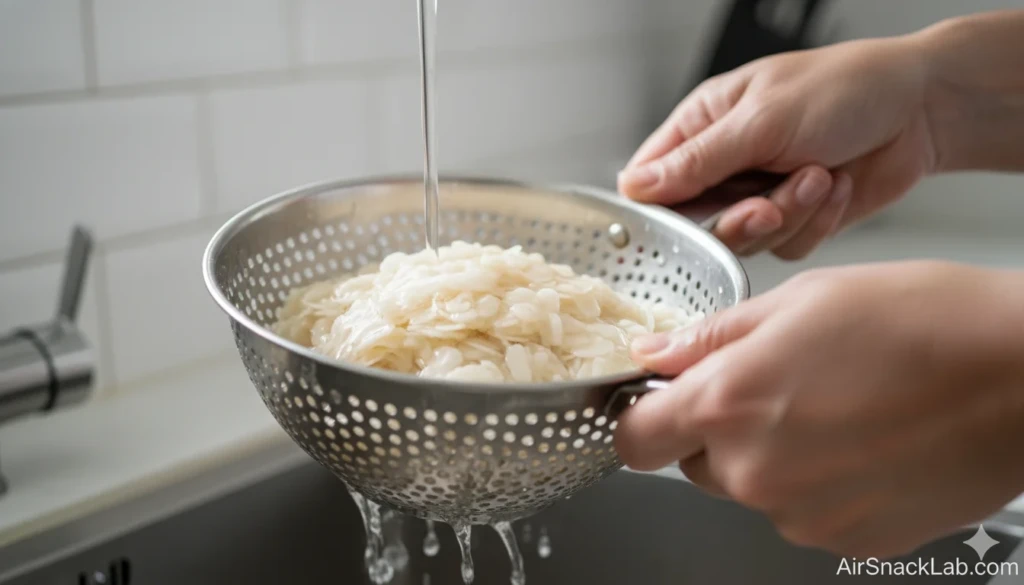
One of the most important parts of any poha recipe is how you rinse and soak the poha rice. If you soak it too long, it gets mushy. If you don’t soften it enough, it stays dry.
- Measure the poha
- Add 2 cups of thick poha to a large bowl or colander.
- Rinse gently
- Rinse the poha under running water for 20–30 seconds, gently moving it with your fingers.
- Do this until the flakes turn soft but not broken.
- You don’t have to soak it for a long time; rinsing + resting is enough.
- Drain and rest
- Drain out all excess water completely.
- Let the poha rest in the colander for 5–10 minutes.
- Sprinkle ¼ teaspoon salt and ¼ teaspoon turmeric on the poha and gently mix with your fingers so the color is even.
When you press a flake of poha rice between your fingers, it should feel soft, not hard or chalky.
Step-by-Step Poha Recipe (How to Make Poha)
Step 1: Fry the Peanuts
- Heat 1 teaspoon oil in a pan on medium heat.
- Add the peanuts and fry until golden and crunchy.
- Remove and keep aside.
This step adds texture and flavor to your poha recipe. You can also dry roast peanuts if you prefer less oil.
Step 2: Prepare the Tadka
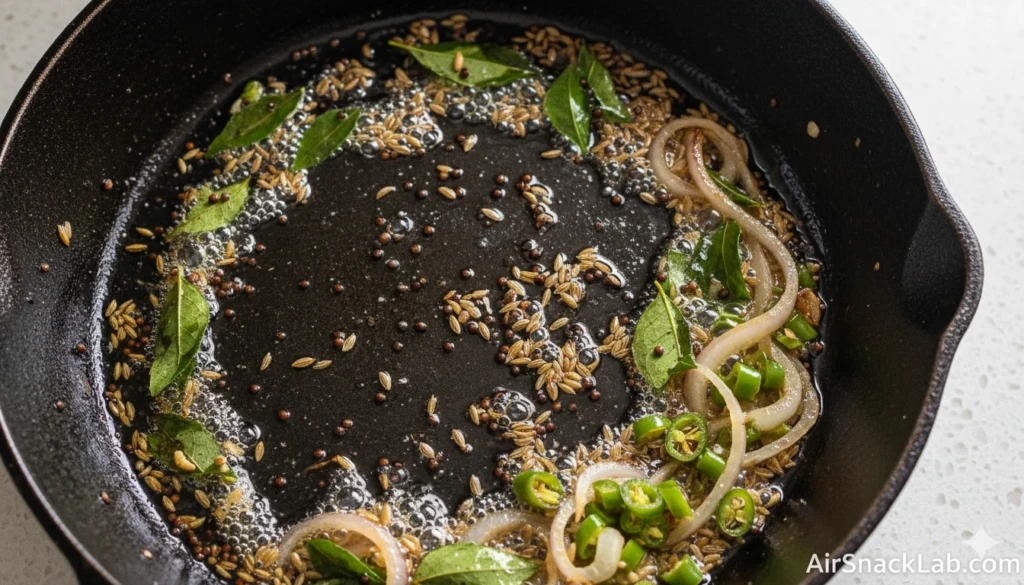
- In the same pan, add the remaining oil (about 1 tablespoon).
- Add mustard seeds and let them splutter.
- Add cumin seeds and let them sizzle for a few seconds.
- Add curry leaves and chopped green chilies.
- Sauté for 30–40 seconds until fragrant.
This tadka is the heart of the poha recipe – it gives that warm, homely flavor.
Step 3: Cook the Onions and Potatoes
- Add the finely chopped onion to the pan.
- Sauté until the onions turn soft and lightly golden.
- Add the potato cubes, a pinch of salt and mix well.
- Cover the pan with a lid and cook for 5–7 minutes on low-medium heat, stirring occasionally, until the potatoes are just cooked through but not mushy.
If the pan looks too dry, sprinkle a tablespoon of water, cover and cook – this helps the potatoes cook faster without burning.
Step 4: Add Poha Rice
- Fluff the rinsed poha gently with your fingers.
- Add the poha to the pan with onions and potatoes.
- Mix everything very gently so the poha rice is evenly coated with the tadka and turmeric.
- Add more salt if needed.
If the poha looks too dry, sprinkle 1–2 tablespoons of water and mix very gently. Cover the pan and steam on low heat for 2–3 minutes. This helps the poha recipe stay soft and moist without becoming sticky.

Step 5: Finish with Peanuts, Lemon and Coriander
- Add the fried peanuts back into the pan.
- Turn off the heat.
- Squeeze in fresh lemon juice and add chopped coriander leaves.
- Gently mix and let the poha rest for 2 minutes with the lid on.
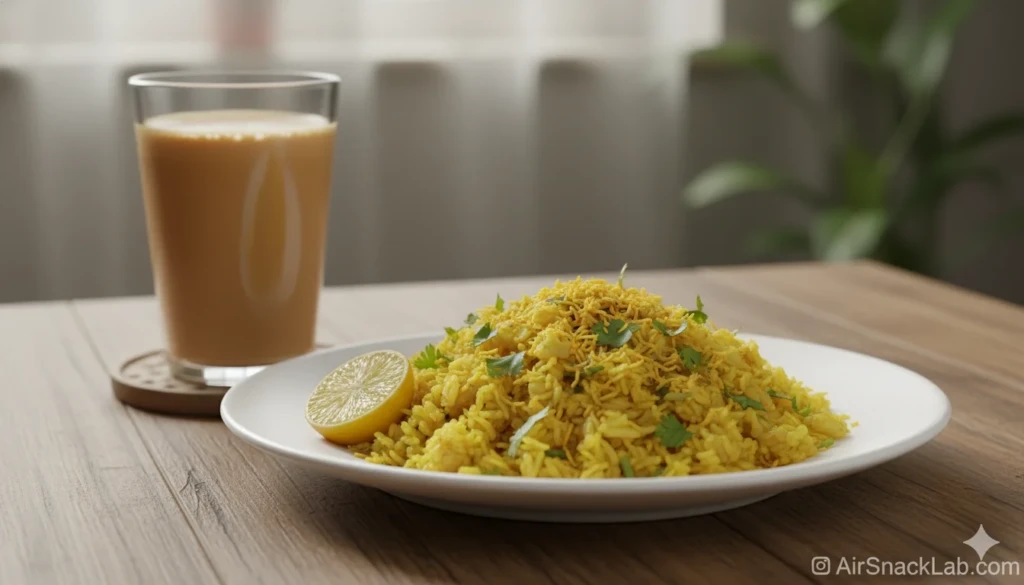
Your delicious poha recipe is ready! Serve hot, optionally topped with fresh grated coconut and sev.
Poha Kaise Banta Hai? (Simple Explanation)
If you’re searching in Hindi, you might type “poha kaise banta hai”. Here’s a very simple explanation:
- Poha ko ache se dhokar naram kar lo.
- Kadai mein tel garam karke rai, jeera, hari mirch aur kari patta ka tadka lagao.
- Pyaz ko halka sa bhun lo, phir aloo daal kar pakao.
- Naram kiya hua poha, haldi aur namak daal kar halki aanch par mix karo.
- Upar se moongfali, nimbu ka ras aur hara dhaniya daal kar garam-garam serve karo.
That’s all – poha kaise banta hai in the simplest steps.
Tips for the Best Poha Recipe
- Use thick poha – Thin poha breaks easily and becomes sticky.
- Don’t oversoak – Just rinse and rest. Soaking in water makes it mushy.
- Adjust turmeric carefully – Too much can make the poha bitter; ¼–½ teaspoon is enough.
- Balance the textures – Soft poha, tender potatoes and crunchy peanuts make this poha recipe special.
- Add lemon at the end – Adding lemon juice off the heat keeps the flavor fresh and bright.
Variations for This Poha Recipe
You can easily customize this poha recipe for your mood and pantry:
1. Veggie-Loaded Poha
Add finely chopped:
- Carrots
- Green beans
- Capsicum
- Green peas
Sauté them along with the onions or after the potatoes for a more colorful and nutritious poha.
2. No-Potato Poha
If you want a lighter poha recipe:
- Skip the potatoes completely
- Increase the amount of onion and peanuts
- Add more lemon juice and coriander for flavor
3. Jain or No-Onion-Garlic Poha
For a Jain style or no-onion version:
- Skip onions and garlic (if using)
- Use just potatoes, green chilies, curry leaves and peanuts
- Add a pinch of sugar for a slightly sweet-salty balance (common in some regions)
4. Vegan Poha
This poha recipe is almost vegan already:
- Use oil instead of ghee in the tadka
- Avoid any dairy toppings
That’s it – your poha recipe is completely plant-based.
Poha Calories and Nutritional Value
Poha is often considered a light and balanced breakfast, especially when made with moderate oil and some vegetables.
Approximate poha calories and nutritional value per serving
(assuming this poha recipe makes 4 servings):
- Calories: ~220–250 kcal
- Carbohydrates: ~35–40 g
- Protein: ~5–6 g
- Fat: ~7–9 g
- Fibre: ~2–3 g
These values are estimates and will vary depending on:
- How much oil you use
- Whether you add potatoes, peanuts or extra veggies
- The exact quantity of poha rice per serving
Is Poha Healthy?
When you look at poha nutritional value, you’ll see that:
- It’s mostly made from flattened rice, so it provides easy-to-digest carbs
- Adding peanuts and potatoes gives some protein and healthy fats plus more energy
- Using vegetables increases fiber and micronutrients
- Cooking in minimal oil keeps the overall poha calories moderate
For many people, a well-balanced poha recipe can be part of a healthy breakfast routine, especially when paired with a cup of tea and maybe some yogurt or fruit.
Serving Suggestions
- Serve this poha recipe hot, right after cooking.
- Add a side of masala chai or coffee for a complete Indian breakfast.
- Top with sev or bhujia if you like extra crunch.
- Sprinkle more lemon juice just before eating if you enjoy tangy flavors.
Leftover poha can be gently reheated in a pan with a teaspoon of water and a lid on. It’s best eaten within the same day.
FAQ About Poha Recipe
1. Can I make poha recipe ahead of time?
Poha tastes best fresh, but you can prep ahead by:
- Chopping onions, chilies, potatoes and keeping them in the fridge
- Rinsing the poha just before cooking so it doesn’t get soggy
You can also cook it in the morning and gently reheat at snack time.
2. Why did my poha turn mushy?
Common reasons:
- You soaked the poha rice in water for too long
- You used very thin poha instead of thick poha
- You stirred too vigorously after adding the poha to the pan
Next time, just rinse and drain, don’t soak.
3. Can I make this poha recipe without peanuts?
Yes. Simply skip the peanuts or replace them with:
- Cashews
- Roasted chana dal
- Seeds like sunflower or pumpkin (for a different crunch)
4. Is poha gluten free?
Poha rice itself is naturally gluten free since it’s made from rice. Just make sure:
- You use clean utensils and a pan that hasn’t been cross-contaminated with wheat flour
- You don’t add any gluten-containing ingredients
Poha Recipe (Easy Maharashtrian Breakfast)
Description
Poha is often considered a light and balanced breakfast, especially when made with moderate oil and some vegetables.
Ingredients
Instructions
- Step 1 – Rinse and Prep Poha
Add 2 cups poha to a large strainer or colander.
Rinse under running water for 20–30 seconds, gently moving it with your fingers.
Drain all the water and let the poha rest in the strainer for 5–10 minutes.
Sprinkle ¼ tsp turmeric and a little salt on the poha and gently mix with your fingers.
The flakes should be soft but not mushy when pressed.
Step 2 – Fry the Peanuts
Heat 1 tsp oil in a pan on medium heat.
Add peanuts and fry until golden and crunchy.
Remove them to a small bowl and keep aside.
Step 3 – Make the Tadka (Tempering)
In the same pan, add the remaining 1 tbsp oil.
Add mustard seeds; let them splutter.
Add cumin seeds; let them sizzle for a few seconds.
Add curry leaves and green chilies; sauté for 30–40 seconds until fragrant.
Step 4 – Cook Onion and Potato
Add the chopped onion to the pan. Sauté until soft and slightly golden.
Add the potato cubes, a pinch of salt and mix well.
Cover the pan with a lid and cook on low–medium heat for about 5–7 minutes, stirring occasionally.
Cook until the potatoes are just tender (not falling apart).
If needed, sprinkle 1–2 tbsp water, cover and cook so they don’t burn.
Step 5 – Add the Poha
Fluff the rinsed poha gently with your fingers.
Add the poha to the pan with onion and potato.
Gently mix so the poha is evenly coated with the tadka and turmeric.
Taste and adjust salt if needed.
If the mixture looks a little dry, sprinkle 1–2 tbsp water, cover and steam on low heat for 2–3 minutes.
Step 6 – Finish and Garnish
Turn off the heat.
Add the fried peanuts back into the pan.
Squeeze in fresh lemon juice (about ½ lemon, or to taste).
Sprinkle chopped coriander on top.
Gently mix once more and let it sit, covered, for 2 minutes.
Step 7 – Serve
Serve the poha hot, with extra lemon wedges on the side.
You can top it with a little sev or grated fresh coconut if you like.
Enjoy with a cup of masala chai for a perfect Indian breakfast.

Notes
- Tips for the Best Poha Recipe
Use thick poha – Thin poha breaks easily and becomes sticky.
Don’t oversoak – Just rinse and rest. Soaking in water makes it mushy.
Adjust turmeric carefully – Too much can make the poha bitter; ¼–½ teaspoon is enough.
Balance the textures – Soft poha, tender potatoes and crunchy peanuts make this poha recipe special.
Add lemon at the end – Adding lemon juice off the heat keeps the flavor fresh and bright.